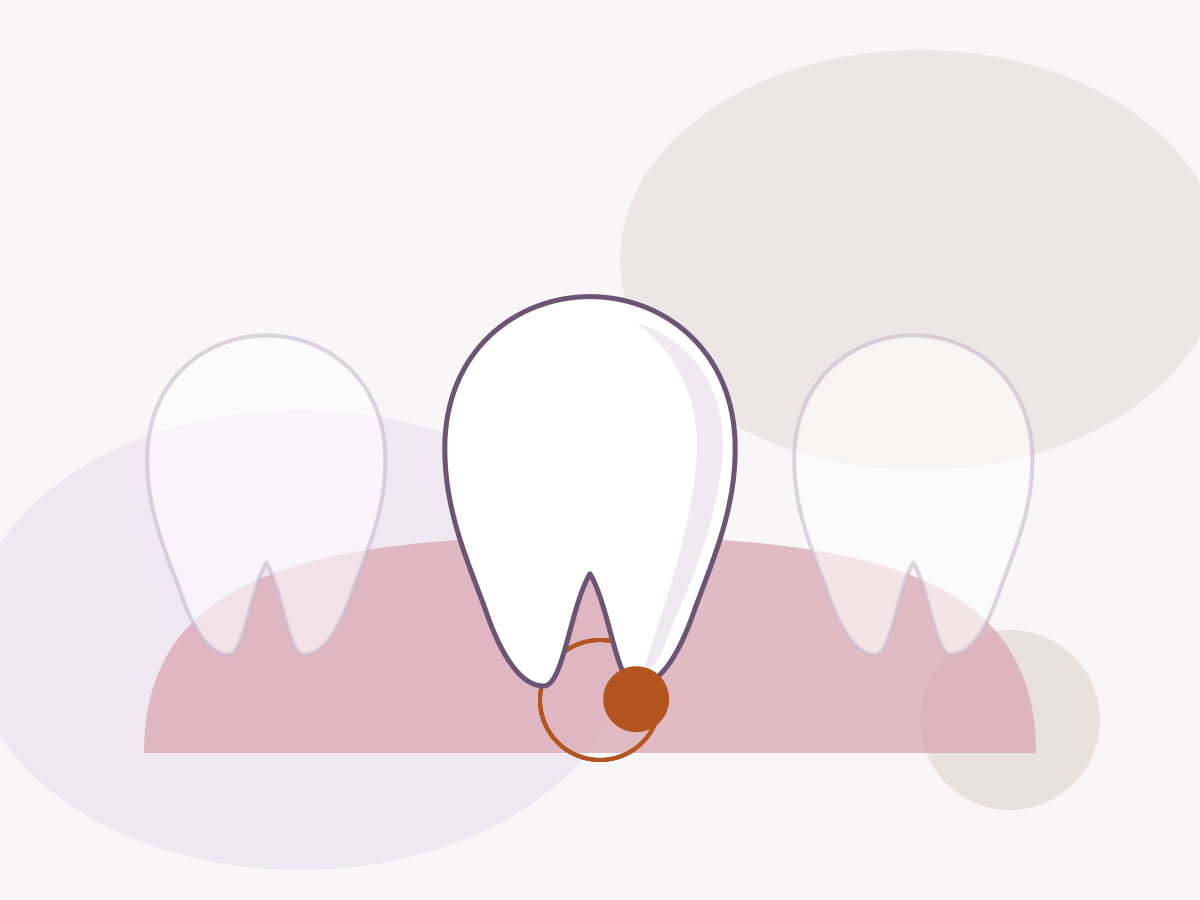
A dental abscess is a pocket of pus caused by a bacterial infection, either at the tip of a tooth’s root or in the gum beside it. It usually starts with decay or a crack that lets bacteria reach the nerve, or with advanced gum disease. An abscess will not clear up on its own, and untreated it can spread into the jaw, the face and the neck. It is the one dental problem that should never wait.
Call us on 01372 679192 as soon as you can. We see abscesses as emergencies.
Recognising an abscess
- Severe, throbbing pain in a tooth or the gum beside it, often worse when lying down
- A tooth that feels raised and is painful to bite on
- Swelling of the gum, cheek, jaw or face
- A bad taste or smell, or pus draining into the mouth
- Sensitivity to hot and cold, or to pressure
- Fever and feeling generally unwell
- In advanced cases, difficulty opening the mouth or swallowing
Sometimes the pain eases suddenly because the nerve has died or the abscess has started to drain. This is not the infection going away; it is still there and still spreading.
When it is a medical emergency
Go to A&E or call 999 if you have swelling spreading towards your eye or down your neck, difficulty breathing or swallowing, a high temperature with a fast heartbeat, or if you are becoming confused or very drowsy. These can be signs of the infection spreading into the deeper tissues and need hospital treatment.
What we will do
The first task is to drain the infection and relieve the pressure, which gives fast relief from the pain. That may mean opening the tooth to let the pus out, or making a small incision in the gum. We will then plan the treatment that deals with the cause, usually root canal treatment to clean out the infected nerve and seal the tooth, or removal of the tooth if it cannot be saved. Antibiotics are sometimes needed alongside this when there is facial swelling or fever, but they are never a substitute for treating the tooth.
While you wait to be seen
Take paracetamol and ibuprofen as directed if you are able to, rinse with warm salt water, keep your head raised when lying down, and avoid hot, cold or sweet food on that side. Do not attempt to burst or drain the swelling yourself.
Preventing abscesses
Most abscesses begin as decay or gum disease that was not caught in time. Regular Oral Health Assessments, prompt treatment of toothache and sensitivity, and good gum health are the best protection. A tooth that has had root canal treatment should be crowned to stop it cracking and becoming reinfected.